Most family outdoor plans fail for the same boring reason: they’re too big. You picture a whole Saturday in the woods, everyone rosy-cheeked and cheerful, and by eleven o’clock someone’s shoes are wet, someone else is hungry, and the youngest has decided the entire outing is “the worst idea ever.” That’s not a failure of enthusiasm. It’s a failure of design.
So here’s the reframe. Instead of chasing an epic day, aim for two genuinely good hours. Two hours of outdoor activities for families with kids, planned properly, beats six hours of dragging tired children around a car park looking for the trailhead. Everything below is built around that idea: match the activity to the age, keep the plan short, and have a backup that doesn’t involve screens.
Why Most Family Outdoor Plans Fall Apart
The trouble usually starts before you leave the house. Parents plan for the best-case version of their children — the rested, cooperative version who exists mainly in holiday photos. The actual child in your back seat is tired from a school week, has a short attention span, and will announce they need the toilet the moment you’re furthest from one.
Weather is the other quiet saboteur. A plan that only works in dry, mild conditions is a plan that collapses the moment a grey cloud rolls in, and in the UK that cloud is not a remote possibility. Add in travel time and the maths gets brutal: a ninety-minute drive each way for forty minutes of actual activity. No wonder everyone’s grumpy.
The fix is to plan around the children you have, not the ones you wish you had. That means shorter journeys, flexible timing, and a realistic idea of how long each age group can stay engaged before the wheels come off.
Matching Outdoor Activities to Your Children’s Ages
Age is the single most useful filter when you’re choosing outdoor activities for families with kids. A five-year-old and a twelve-year-old need completely different things from a day outside, and trying to satisfy both with one activity is how arguments start.
Toddlers and Preschoolers (roughly 2 to 4)
At this age the activity barely matters. What matters is texture, movement and the freedom to stop every thirty seconds. Think puddle splashing in wellies, collecting leaves in a bucket, feeding ducks, or a slow wander around a garden with a bug hunt. Expect twenty to forty minutes of genuine interest, then a snack, then maybe another twenty. Anything involving a long walk to a viewpoint is a non-starter.
Early Primary (roughly 5 to 8)
This is the golden window. Children this age love a task with a goal — a scavenger hunt, following a simple trail with markers, building a den from fallen branches, or a bike ride on a flat, traffic-free path. They’ll happily walk for an hour if there’s something to find at the end. Bring a checklist and a pencil and you’ve bought yourself another twenty minutes.
Older Primary (roughly 9 to 12)
Now they want a bit of challenge and a bit of risk. Climbing, scrambling over rocks, geocaching-style treasure hunts, archery, or a proper hill walk with a summit to conquer. They’ll also tolerate a longer drive if the payoff is interesting. Give them a role — map reader, timekeeper, snack carrier — and they’ll engage far more than if they’re just following you around.
Teenagers
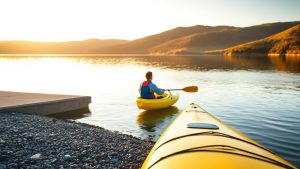
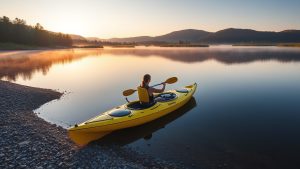
Don’t fight it. Offer something with a skill attached: kayaking, climbing, mountain biking, or a long walk with a genuinely good café at the end. They’re more likely to come if a friend comes too. And if they’d rather stay home, that’s allowed. Dragging a reluctant teenager along ruins the outing for everyone else.
A Workable Half-Day Template You Can Copy
Here’s a shape that works for a mixed-age family, roughly 9am to 1pm. Adjust the times to suit your household, but keep the structure — the rhythm matters more than the exact clock.
9:00 — Leave the house. Bags packed the night before. Nobody is hunting for a missing glove at this hour. Keep the drive under forty minutes if you possibly can.
9:45 — Arrive and let them run. Don’t start with the planned activity. Give them fifteen minutes of unstructured tearing about while you get your bearings. This burns off the car-trip energy and makes the next part possible.
10:00 — Main activity. This is your trail, your hunt, your den-building session. Ninety minutes maximum, with a snack break in the middle. If they’re still keen at the end, brilliant. If they’ve had enough, stop. Stopping while it’s still fun is how you get them to come back next week.
11:30 — Snack and sit down. A proper sit-down with food and a drink. This is not optional. Hungry children are not reasonable people.
12:00 — Something easy. A playground, a short wander, feeding ducks, or just lying on a blanket. Low effort, low stakes.
12:45 — Head home. Leave before the meltdown, not after it. If you’re driving away while everyone’s still happy, you’ve won.
One short list is all this article needs, so here it is: the whole template rests on three rules — short drive, snack in the middle, leave early.
Packing and Snacks That Actually Get Eaten
Forget the elaborate picnic. In practice, children eat on the move, so pack things that survive being shoved in a rucksack and can be eaten one-handed. Flapjacks, oatcakes, apple slices, cheese cubes, a bag of grapes, and plenty of water. Something salty as well as something sweet, because salty snacks make them drink, and drinking stops the headache that ends the trip early.
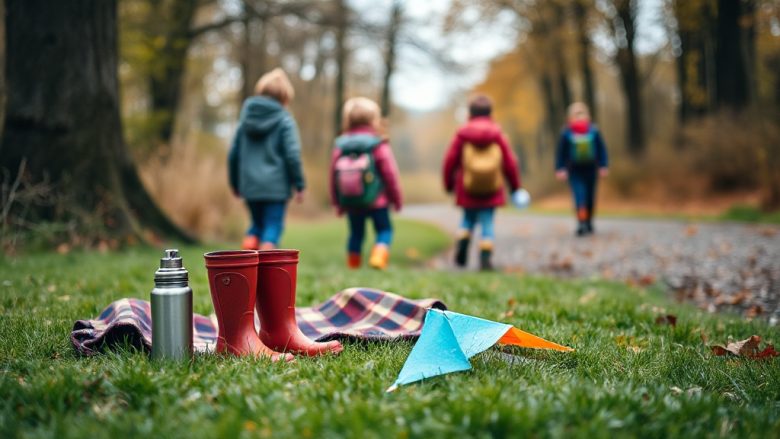
Clothing matters more than food, honestly. Waterproof trousers and wellies change what’s possible — with them, a muddy puddle is an activity. Without them, it’s a disaster. Bring a spare pair of socks per child, a bin bag for wet kit, and a small towel. In colder months, layers beat one thick coat, because children overheat running around and then freeze the moment they stop.
Two more things worth carrying: a basic first-aid kit with plasters, and a roll of dog poo bags. The bags are for rubbish, wet socks, and any number of surprises. You’ll use them.
Weather Backup Plans That Don’t Involve Screens
Rain doesn’t have to cancel the outing. It just changes it. If the forecast is grim, swap the hill walk for a low-level woodland wander where trees give some cover, or embrace the wet entirely with a puddle walk in full waterproofs. Children who are dressed for rain have a far better time in it than children who aren’t.
Wind is the one to take seriously. Exposed hilltops and coastal paths are miserable and genuinely risky in strong gusts, so save those for a calmer day and choose a sheltered valley or a walled garden instead.
Heat is the other one people underestimate. On a hot day, shift the outing earlier, stick to shade and water, and bring more to drink than you think you need. A stream to paddle in is worth more than any planned activity.
The real backup plan is a shorter version of the original one. Same place, half the distance, twice the snacks. Scale down rather than cancel, and you’ll still get your two good hours.
Keeping It Cheap Without It Feeling Cheap
Outdoor activities for families with kids don’t need to cost anything. The best ones usually don’t. A local nature reserve, a canal towpath, a country park, a beach at low tide, a woodland with a few fallen logs — these are free and children love them as much as any paid attraction.
Where money does help is in reducing friction. A small spend on waterproofs, a decent flask, or a second-hand bike can transform how often you get out. That’s worth more than a one-off ticket to somewhere flashy.
Rotate your spots rather than travelling further. Three or four familiar local places, visited in different seasons, give children a sense of ownership — they’ll notice the same tree changing, the same stream rising. That familiarity is what turns an outing into a habit, and a habit is what actually gets your family outdoors regularly.
So start small this weekend. Pick one place within half an hour of home, plan two hours, pack the snacks and the waterproofs, and leave while everyone’s still smiling. Do that a few times and you’ll have something better than an epic day out: a family that goes outside without anyone having to be persuaded.