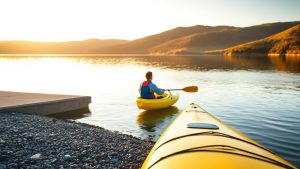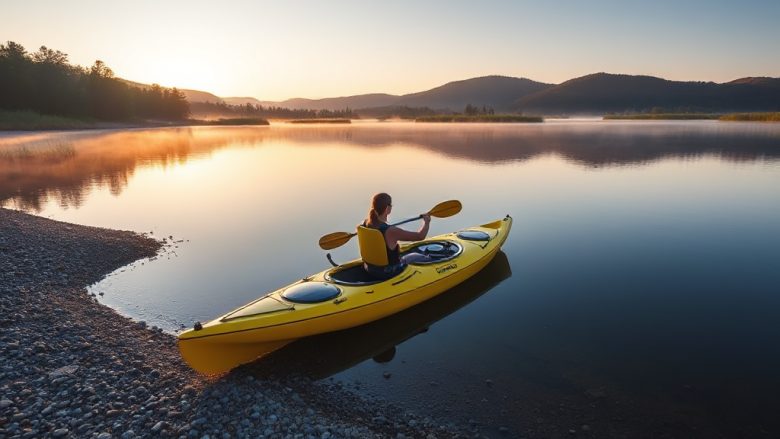
The single mistake first-time paddlers make is choosing a kayaking spot for its views instead of its water. A dramatic coastline with a postcard horizon can hide chop, tidal pull and awkward launches that turn a gentle afternoon into a swim. The best kayaking spots for beginners are the boring ones on paper: sheltered, shallow at the edges, easy to get in and out of, and short enough to paddle back before you tire. This shortlist is judged on exactly those things, not on scenery, so you can pick your first venue by conditions and arrive expecting no surprises.
Quick Pick Shortlist: Seven Beginner-Friendly Waters
Here is the compact comparison. Each entry is a type of venue rather than a single named location, because the same conditions repeat in thousands of places. Match the type to whatever is near you.
1. Sheltered inland lake with a marked swimming area. The safest default. No tide, no swell, predictable depth near the shore, and usually a car park within carrying distance of the water. Best for a first ever paddle.
2. Slow river with a wide, deep bend. Gentle current, plenty of room to turn, and grassy banks for easy exits. Best for practising steering without wind pushing you around.
3. Calm estuary at slack water. Flat water twice a day, with a firm slipway or beach. Best if you want a sense of open water without committing to the sea.
4. Small reservoir with a designated paddling zone. Often glassy in the early morning, with clear rules about where you can go. Best for a structured first session.
5. Protected bay behind a headland. The land blocks the prevailing wind, so the water stays flat even when the forecast looks breezy elsewhere. Best for a half-day trip.
6. Canal or navigable waterway. Almost no current, shallow edges, and easy to step out anywhere. Best for testing a new boat or a nervous paddler.
7. Tidal lagoon or natural harbour. Warm, shallow and enclosed, but only at the right stage of the tide. Best once you have checked a tide table once or twice.
What Actually Makes a Spot Beginner-Friendly
Beginners tend to overrate beauty and underrate access. The water you can see from the car park is not the water you will be paddling in five minutes later. What matters is a short list of physical facts.
Shallow edges come first. If you can stand up in chest-deep water within a few metres of the bank, a capsize is an inconvenience rather than an emergency. Sandy or gently sloping bottoms beat mud, rocks and steep drop-offs, because you can wade in and out without slipping.
Easy entry and exit is the second test. A slipway, a low jetty, a firm beach or a flat grassy bank all work. What does not work is a two-metre drop from a wall, a steep set of slimy steps, or a launch that requires lifting a boat over a railing. If getting in is hard, getting out when you are tired is harder.
Calm water is the third. Look for shelter from the wind, no breaking waves, and no strong current. On a lake this usually means a bay rather than the middle. On a river it means a wide, slow section. On the coast it means somewhere behind a headland, a breakwater or a spit of land.
Finally, think about scale. A venue you can paddle across in twenty minutes and return from in another twenty suits a first trip far better than a long linear route with no shortcuts home. Small is not unambitious. Small is how you build the skills that make bigger water enjoyable later.
Conditions to Check Before You Go
Even the calmest venue turns unpleasant in the wrong conditions, and the forecast that matters is the one at water level, not in the town centre.
Wind is the biggest factor for beginners. Anything sustained above roughly ten miles per hour will push a light kayak sideways and make the return leg a slog, especially on open water. Gusts matter more than averages. Check the direction too: an offshore wind can carry you away from the shore surprisingly quickly, while an onshore wind makes the launch messy but keeps you close to land.
On the sea and in estuaries, tides change everything. Slack water, the pause between the ebb and the flood, gives you a window of near-still water. Paddling against a running tide is exhausting even for strong swimmers. A tide table plus a quick look at the local high and low times will tell you when that window falls.
Water temperature deserves more respect than air temperature. Cold water shocks the body and makes even a short swim serious. If the water is cold, dress for immersion rather than for the sunshine, and keep the trip short.
Weather that is merely grey is fine. Weather that is building is not. If the forecast shows thunderstorms, a sharp drop in pressure, or a wind that is strengthening through the day, pick another day. There is no prize for paddling in conditions you cannot yet handle.
One more check: other traffic. A busy boating lane, a jet ski hire zone or a stretch used by rowing crews adds noise, wash and unpredictability. Quiet water is beginner water.
Safety and Gear Minimums
You do not need much equipment to start, but a few items are non-negotiable.
A properly fitted buoyancy aid is the first. It should be snug, adjustable and rated for paddling, not a generic water-sports vest. Wear it zipped and tight from the moment you launch, not stowed behind the seat.
Dress for the water, not the weather. Quick-drying layers, a windproof top and, in cold conditions, a wetsuit or dry trousers will keep a capsize from ending your day early. Footwear that stays on and grips wet surfaces is worth more than it sounds when you are carrying a boat up a slipway.
Take a phone in a waterproof pouch, a bottle of water, a hat and sunscreen. A spare paddle or a paddle leash is useful on open water. Tell someone where you are going and when you expect to be back, and stick to the sheltered zone you planned rather than drifting toward the interesting-looking bit on the horizon.
Skills matter more than kit. Before you go anywhere exposed, practise a wet exit in shallow water with someone watching, learn how to re-enter your kayak or how to be rescued, and get comfortable paddling backwards and turning with a sweep stroke. Ten minutes of practice in knee-deep water removes most of the fear.
If you are hiring a kayak, ask about the venue as well as the boat. Good hire staff will tell you where the current runs, where the wind funnels and where the shallow edges are, which is exactly the local knowledge a first-timer lacks.
Frequently Asked Questions
Is a lake or a river better for a first kayak trip?
A lake or reservoir is usually better for a first trip because there is no current to fight and no tide to time. A slow, wide river is a good second step once you can steer and stop confidently, since moving water teaches you boat control quickly but punishes hesitation.
How do I know if the water is too rough for a beginner?
If you can see whitecaps on open water, if the wind is strong enough to blow spray across the surface, or if you would not feel comfortable swimming there, it is too rough. A simple test is to watch the water for five minutes. If it looks the same throughout, it is steady. If it is building, leave it for another day.
What should a beginner wear for kayaking?
Wear layers that dry quickly, a windproof outer layer, and a well-fitted buoyancy aid that you keep on at all times. In cold water, add a wetsuit or dry trousers. Avoid jeans and heavy cotton, which hold water and chill you fast if you end up swimming.
Do I need a lesson before paddling on my own?
You do not need a formal course to paddle on a sheltered lake, but you do need to know how to get out of the boat if it tips, how to get back in, and how to turn and stop. An hour with an instructor or an experienced friend covers all of that and makes the first solo trip far less stressful.
Choose the calm water first and the view second, and your first kayak trip will be the one you want to repeat. The best kayaking spots for beginners are not the most dramatic. They are the ones where the launch is easy, the edges are shallow, the water is flat, and the trip home is short enough to leave you wanting more.